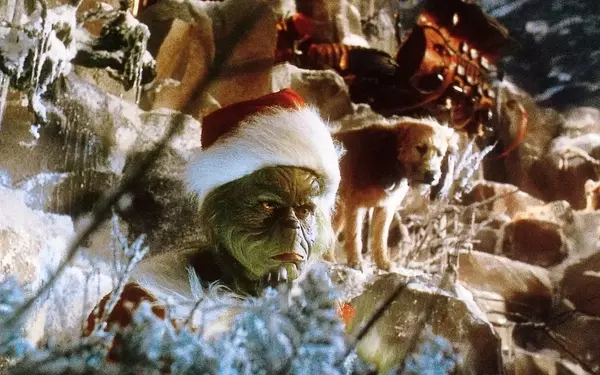
Renowned director Ron Howard has provided an update on the potential continuation of the festive cinematic favorite, "How the Grinch Stole Christmas." He firmly stated that any progression on a sequel, which would once again feature the incomparable Jim Carrey as the titular character, is entirely dependent on the availability of an outstanding script. This shared conviction between Howard and Carrey stems from their deep respect for the 2000 original, a film that successfully brought Dr. Seuss’s whimsical narrative to life and has since become a cherished holiday tradition for many. Writers Alec Berg, Jeff Schaffer, and David Mandel are currently developing story concepts, aiming to capture Dr. Seuss’s unique blend of humor and fantasy. Howard also acknowledged the significant physical demands placed on Carrey during the initial production, particularly concerning the extensive makeup and contact lenses, and expressed a clear intention to mitigate such difficulties in any future filming. This careful consideration underscores a commitment to both creative excellence and the comfort of the lead actor, ensuring that a potential return to Whoville is thoughtfully executed.
Behind the Scenes: The Diligent Path to a Grinch Revival
The enduring appeal of Whoville and its grumpy green resident, the Grinch, continues to inspire discussions of a cinematic return. Director Ron Howard recently addressed the swirling rumors surrounding a sequel to his 2000 hit, "How the Grinch Stole Christmas," starring the versatile Jim Carrey. Howard made it unequivocally clear that the primary hurdle for the project to advance is the creation of an exemplary script. This critical criterion is a mutual agreement between him and Carrey, highlighting their shared commitment to artistic integrity rather than rushing a follow-up. The original film, a vibrant live-action adaptation of Dr. Seuss's beloved 1957 children's book, cemented its place as a holiday staple, making the prospect of a worthy successor a delicate endeavor.
Reports from earlier this year, initially brought to light by The Hollywood Reporter, confirmed that a continuation was indeed in its early stages of development under Universal and Imagine Entertainment. The writing team, comprising Alec Berg, Jeff Schaffer, and David Mandel, is tasked with crafting a narrative that respects Dr. Seuss's imaginative storytelling and characteristic blend of comedy and fantasy. Furthermore, Howard disclosed past on-set challenges for Carrey, who experienced considerable discomfort and even panic attacks due to the elaborate, claustrophobic Grinch makeup and specialized contact lenses. For any potential new film, the director aims to innovate production techniques to ensure a significantly smoother and less taxing experience for Carrey, allowing him to fully embody the character without such severe personal strain. This dedication reflects a progressive approach to filmmaking, balancing creative ambition with performer welfare.
Both Howard and Carrey feel immense pride in the enduring legacy of their initial collaboration. They understand its status as a generational tradition and are therefore approaching the sequel's potential with extreme prudence. Their collective aspiration is to cautiously move towards a new chapter that not only honors the previous success but also expands upon the cherished universe of the Grinch with fresh, high-quality storytelling.
Ron Howard's and Jim Carrey's discerning stance on the 'Grinch' sequel offers a refreshing perspective in an industry often driven by rapid franchise expansion. Their prioritization of a phenomenal script and an improved production environment for the lead actor serves as a testament to genuine artistic vision. It underscores the understanding that some stories, especially those with such a deep cultural footprint, deserve more than just a quick turnaround. This commitment implies a higher standard for cinematic sequels, suggesting that enduring impact is cultivated through thoughtful creation rather than mere commercial expedience, ultimately benefiting audiences who crave depth and quality in beloved narratives.