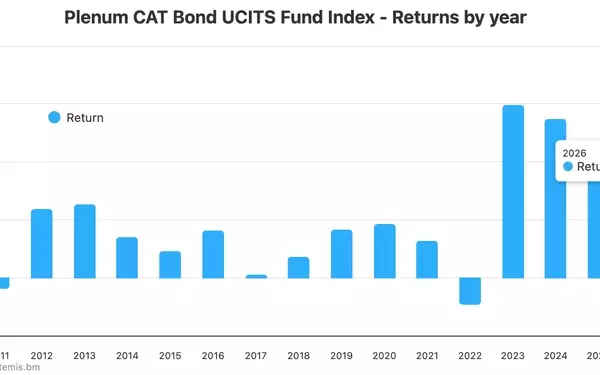
In 2026, worldwide insured catastrophe costs have once again surpassed the $100 billion mark, a significant milestone noted by Steve Bowen, Chief Science Officer at Gallagher Re. This represents the tenth year in a row that this figure has been breached when adjusted for inflation, and the seventh consecutive year on an unadjusted basis. While historically a major concern, this level of loss is now perceived differently by the insurance industry.
The market's reaction to annual losses exceeding $100 billion has dramatically evolved over the past decade. Bowen highlighted that what was once considered a monumental event is now viewed as notable but no longer a critical turning point on its own. This shift is attributed to valuable lessons learned from challenging loss years, leading to enhanced risk management strategies, more robust capital reserves, advanced modeling techniques, and more disciplined pricing structures. These improvements have collectively positioned the market more effectively to absorb higher loss burdens.
Looking ahead, Bowen emphasized the critical question of how the market will respond when annual insured losses eventually climb beyond $200 billion for the first time. Given that the average nominal losses over the last five years stand at approximately $150 billion, reaching the $200 billion threshold appears to be a matter of time rather than a distant possibility. This projection underscores the increasing importance of building industry capital and capacity, alongside continuous innovation in resilience measures and risk transfer mechanisms. Furthermore, as the frequency and intensity of secondary perils, particularly severe convective storms, escalate, the pressures on the re/insurance sector are set to intensify, prompting more firms to seek efficient protection from capital markets.
Beyond financial implications, climate risk carries broader societal consequences, affecting vulnerable nations and communities with limited resources for protection and recovery. The insurance and financial sectors bear a crucial responsibility in addressing this. This involves not only narrowing the protection gap but also fostering greater climate resilience through novel funding approaches, innovative risk-transfer solutions, improved risk assessment data, and increased investment in adaptation strategies. Ultimately, while a resilient insurance industry is vital, the overarching challenge is to cultivate a more resilient global society capable of facing future environmental uncertainties.